

Renovating a home in Toronto is an exercise in managing the unexpected. You open a ceiling and find plumbing where a beam needs to go. You try to level a floor and discover the 1920s foundation has shifted. In this environment of discovery, framing mistakes in Toronto renovations are not just common—they are expensive.
We’ve been called in to fix framing on dozens of GTA projects where a general contractor or a less experienced framing crew made critical errors that threatened the structural integrity or failed city inspections. Understanding these common pitfalls helps you understand why hiring a specialist framing contractor matters.
Here are the five most frequent and dangerous framing mistakes Toronto renovations face, and how Hi Quality Homes’ process prevents them.
1. Ignoring the Load Path (The Missing Bearing Wall)
This is the number one structural sin in open-concept renovations. Homeowners want to remove a wall between the kitchen and living room. A contractor assures them, “We can just put a beam in the ceiling.”
The Mistake: They install a beautiful new flush beam in the ceiling joist cavity but fail to verify that the load transfers correctly down to the foundation. Often, the new beam ends up bearing on a single 2×4 stud that was meant to hold drywall, not half the second floor. Or worse, it bears on a floor joist below that isn’t designed for a point load.
The Result: Sagging floors above, cracked drywall, and a very expensive re-opening of walls to install a proper post and footing.
The Hi Quality Protocol: We map the continuous load path before any wall comes down. We ensure that for every beam installed, there is a stack of structural studs (or a steel post) beneath it that lands directly on a beam in the basement or a new concrete footing. We don’t guess; we engineer the path.
Learn more about proper load path requirements in Toronto framing.
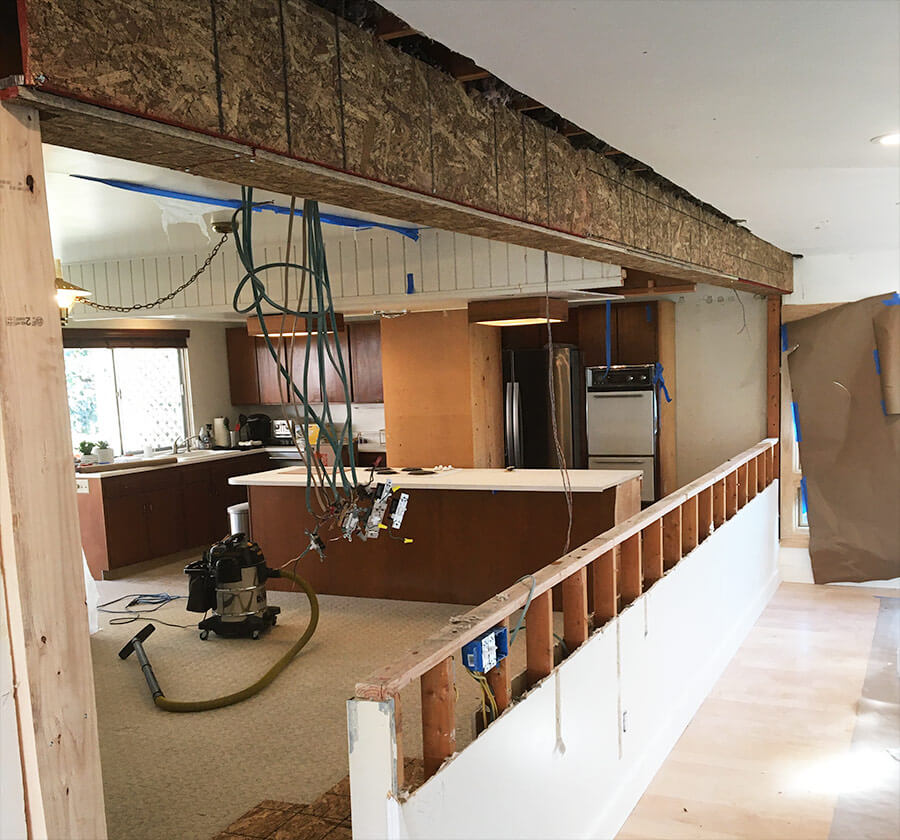
Removing walls without establishing a continuous load path to the foundation causes sagging floors and costly structural failures.
2. The Squash Block Omission
With the rise of engineered I-joists (those thin plywood webs with 2×3 flanges), a new mistake has become epidemic: missing squash blocks.
The Mistake: A contractor installs a point load (like a post supporting a beam) directly onto the top flange of an I-joist. They screw the post down and move on. The problem? The thin top flange of an I-joist is not designed to take a concentrated vertical load; it will crush or buckle over time.
The Fix: A squash block—a piece of solid 2x lumber cut to fit vertically inside the floor cavity, directly under the point load. This block transfers the weight around the weak web and down to the structure below.
The Hi Quality Protocol: Our pre-inspection checklist specifically flags every point load location. We verify squash blocks are tight and nailed off before subfloor goes down.
Reference: Weyerhaeuser Technical Support – Squash Blocks Installation Guide

Missing squash blocks under point loads cause I-joist web buckling—a common and expensive framing error.
3. Compromising Weather Protection in Winter
Toronto renovations don’t stop when the temperature drops, but framing practices must change. A mistake unique to our climate is trapping moisture in the wall assembly during winter framing.
The Mistake: Framing a house in January, getting it closed in with house wrap, and then immediately cranking the temporary heat to 25°C to dry out the mudding. This forces warm, moist interior air into the cold wall cavities, where it condenses on the back of the sheathing. By spring, you have a mold farm inside your brand-new walls.
The Hi Quality Protocol: We manage the drying process carefully. We use dehumidifiers alongside temporary heat to keep relative humidity low until the building envelope is fully sealed with vapour barrier. We also ensure proper ventilation during the heating phase to avoid “greenhouse effect” condensation.
Read about condensation control in cold weather construction from Pacific Northwest National Laboratory.
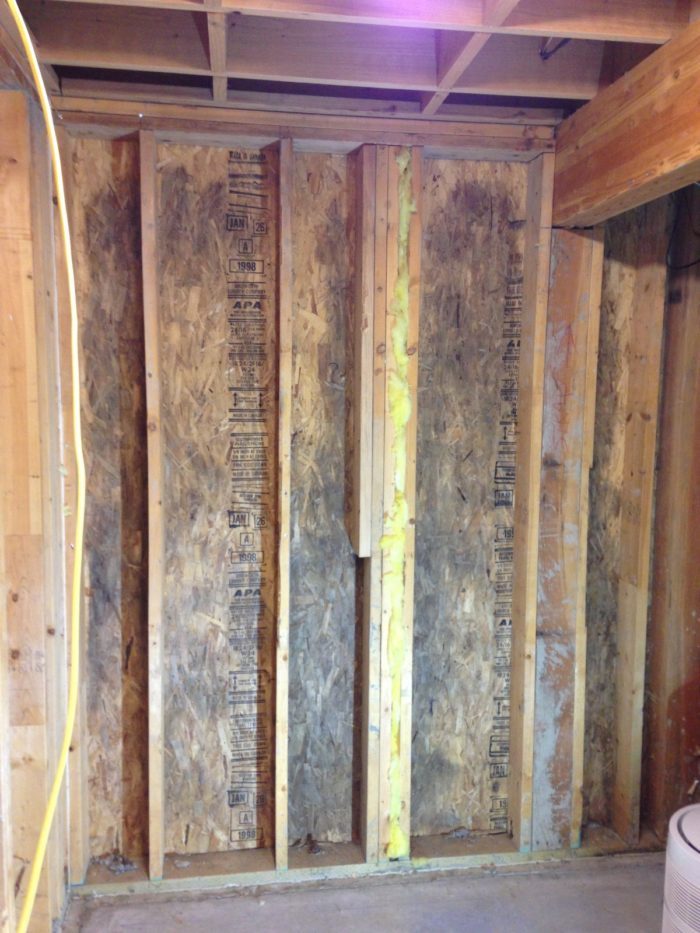
Winter framing in Toronto requires careful moisture management; improper heating causes hidden condensation and mold.
4. Rushing the Layout and Alignment
Framing is a trade where 1/8 inch error on the first floor becomes a 1/2 inch error by the roof. Inaccurate measurements or rushing the initial layout leads to:
- Walls out of plumb (leaning).
- Floors out of level.
- Window rough openings that are too small for the ordered windows.
The Hi Quality Protocol: We use laser levels and total stations for initial layout, not just a tape measure and chalk line. We spend an extra half-day on layout to save weeks of headaches during finish carpentry. A square, plumb frame makes every subsequent trade (cabinet installers, tile setters) faster and happier.

Precision layout with laser levels prevents cumulative errors that lead to out-of-plumb walls and finish problems.
5. Incorrect Truss Installation and Bracing
Engineered roof trusses come with a very specific set of shop drawings that dictate exactly where they go and how they must be braced.
The Mistake: The framing crew “eyeballs” the truss layout or ignores the temporary bracing requirements during installation. They just stand them up and nail them off. Without proper lateral bracing (permanent and temporary), a truss roof is vulnerable to collapse under wind load or snow.
The Inspection Failure: Toronto inspectors are now diligent about checking truss bracing against the engineer’s plan. If the plan calls for specific web bracing and it’s missing, the inspection fails.
The Hi Quality Protocol: We keep the truss shop drawings on site in a weatherproof sleeve. The crew lead reviews the bracing schedule daily. We never let a truss package dictate the build; the engineering dictates the build.
Technical reference: Guidance on Diagonal Bracing for Long Span Trusses
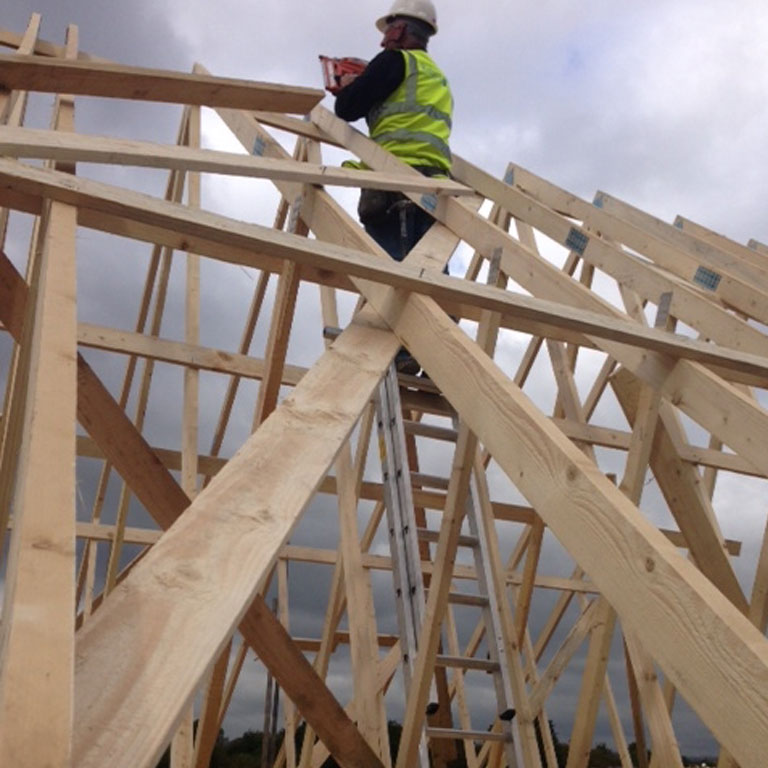
Following truss shop drawings for bracing is essential to pass inspection and ensure roof stability.
The Cost of a Mistake vs. The Cost of Expertise
Fixing a framing mistake in a Toronto renovation after drywall is installed can cost 5 to 10 times more than getting it right during the rough-in phase. In Toronto’s competitive construction market, the best way to avoid these mistakes is to hire a dedicated framing contractor whose only job is structural integrity.
Don’t let framing mistakes Toronto renovations commonly face derail your project timeline. Contact Hi Quality Homes for a professional framing assessment.