

Platform Framing vs Balloon Framing: Choosing the Right Structural System for Your Toronto Home
When planning a renovation or new build in Toronto, understanding platform framing vs balloon framing is essential for making informed decisions about your home’s structural integrity, fire safety, and long-term value. Walk through a century-old home in Cabbagetown or The Annex, and you are likely standing inside a balloon-framed structure. Step into a new build in Etobicoke or North York, and you are almost certainly in a platform-framed house.
These two methods represent the evolution of wood construction in North America, and understanding the difference is crucial for Toronto homeowners planning a renovation or addition. While both use dimensional lumber to create the skeleton of a house, they differ fundamentally in how the walls and floors connect. This connection impacts fire safety, energy efficiency, and structural movement (like drywall cracks). Here’s what you need to know to make an informed decision for your GTA project.
What is Balloon Framing?
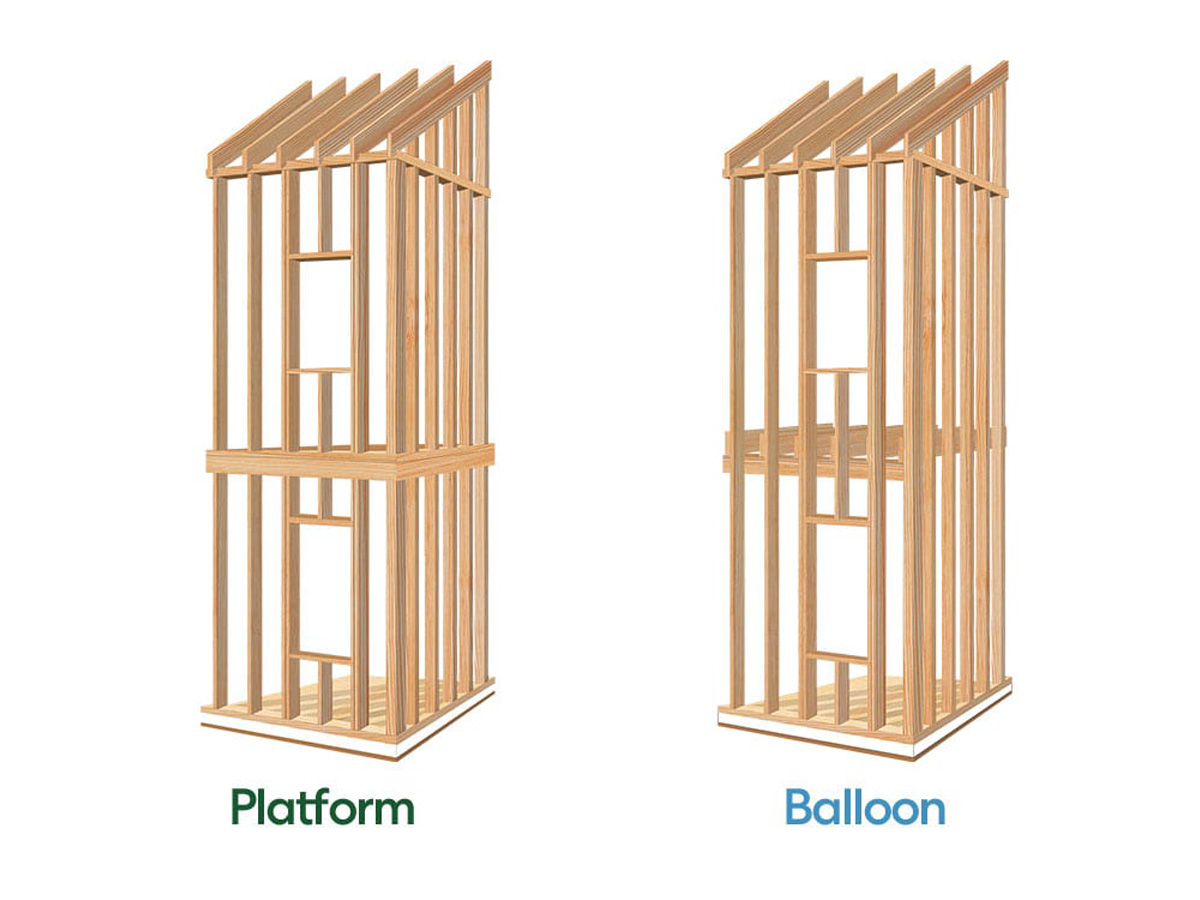
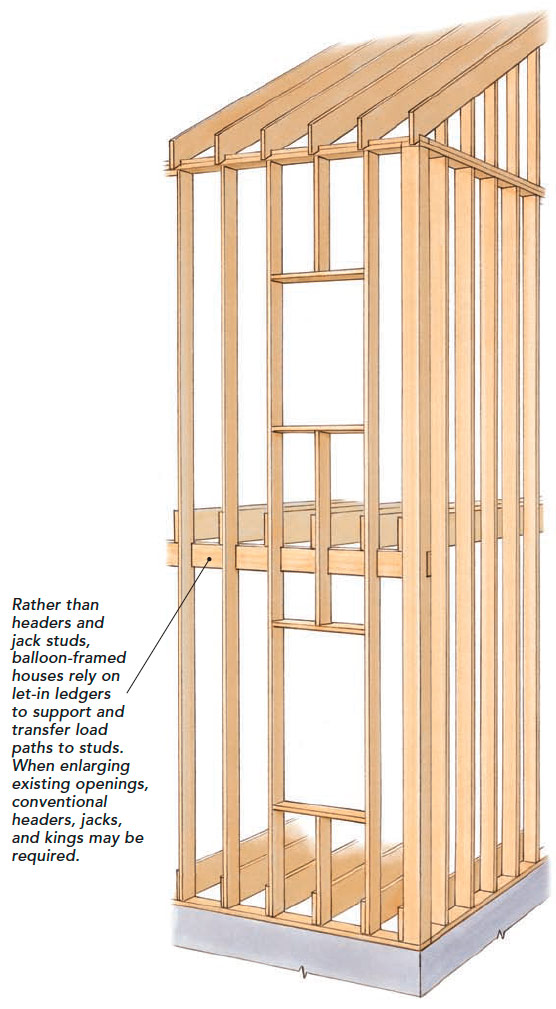
Balloon framing is the grandfather of modern light wood construction, prevalent from the 1880s through the 1940s. In this system, the wall studs run continuously from the foundation sill all the way up to the roof rafters—often 20 to 30 feet in a single piece.
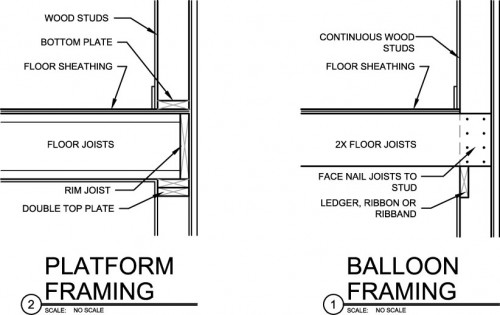
How floors attach: The second-floor joists are hung off a “ribbon” or ledger board that is notched into the side of these continuous studs.
The advantage: It eliminates vertical shrinkage in the walls. Because there are no horizontal plates sandwiched between floors (except at the top), the wood doesn’t compress over time. This is why 100-year-old plaster walls in Toronto often have fewer drywall pops than a 10-year-old condo.
The fatal flaw (Fire): The wall cavities between these studs are open from basement to attic. Unless retrofitted with fire blocking, this creates a perfect chimney for fire to travel vertically through the house in minutes. This is a critical consideration when comparing platform framing vs balloon framing for Toronto’s older neighborhoods.
What is Platform Framing?
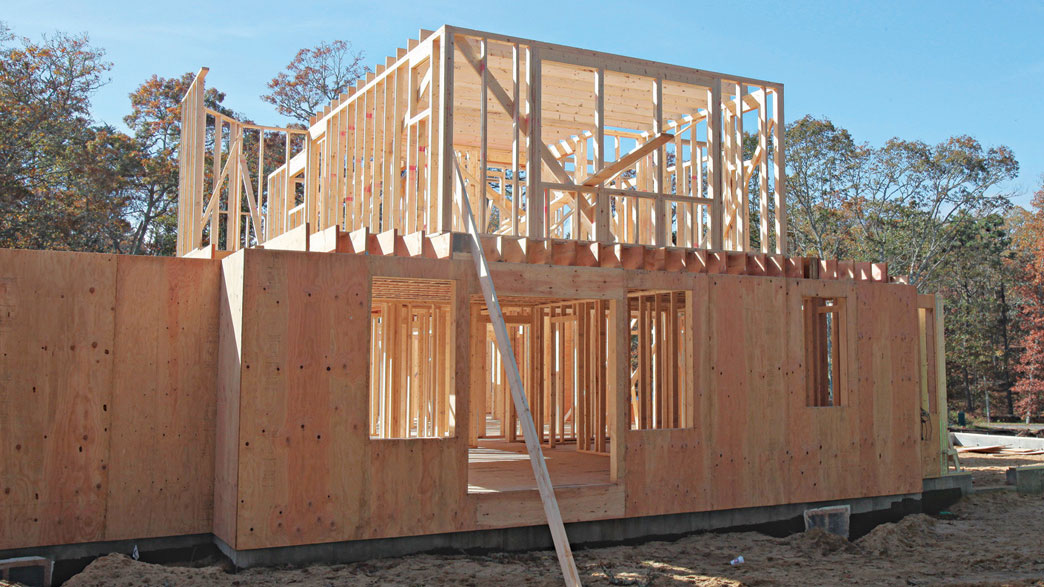
Platform framing has been the standard in North America for over 60 years and is the default method for all new residential builds in Ontario today. In this system, each floor is built as a separate platform.
The process: The framers build the first-floor walls (typically 8-10 feet tall), install the floor joists on top of those walls, sheath the floor to create a “platform,” and then build the second-floor walls on top of that platform.
Why it dominates: It is safer and easier to build. Crews are never working on a wall taller than a single story. It also inherently solves the fire problem—the floor platform itself acts as a fire stop, cutting off the vertical cavity between floors automatically. This makes platform framing vs balloon framing an easy choice for modern Toronto construction.
The downside (Shrinkage): The horizontal wood plates and floor joists are perpendicular to the grain. As wood dries over time, it shrinks across its width. In a three-story platform-framed building, this can lead to cumulative shrinkage, causing drywall cracks or door alignment issues.
The Modern Hybrid: Semi-Balloon Framing
There is a third option often used in mid-rise (4-6 story) buildings in Toronto: Semi-Balloon Framing. This method uses platform-framed walls but hangs the floor joists from the top plates using heavy-duty hangers, rather than setting them on top of the plates. This reduces the amount of cross-grain wood in the load path, minimizing shrinkage in taller buildings.
We sometimes employ this technique in luxury custom homes with expansive window walls where minimal settling is critical for glazing performance. When evaluating platform framing vs balloon framing for high-end Toronto projects, this hybrid approach offers the best of both worlds.
Which System Should You Choose for Your Toronto Project?
For 99% of homeowners in the GTA, the choice is made for you by the building code and modern materials availability:
- New Builds & Full Additions: Platform Framing. It is the only method that seamlessly integrates with modern engineered lumber (I-joists, LVL beams) and meets Ontario Building Code fire-stopping requirements out of the box.
- Renovating a Heritage Home (Balloon Frame): You aren’t choosing balloon framing; you’re repairing it. This requires specific expertise. When we add a rear dormer or extension to a Rosedale century home, we must carefully tie new platform framing into the existing balloon frame. This involves meticulous removal of plaster to install fire blocking in the old walls and managing different settlement rates.

The Renovation Trap: Know What’s Behind Your Drywall
Many Toronto homeowners with older homes are shocked during a reno to find no top plate on their second-floor walls. They open the wall to move a light switch and are looking down a 25-foot shaft to the basement. This is a classic balloon-frame condition.
If you are undertaking a significant renovation in a pre-WWII Toronto home, your budget must account for fire blocking remediation. It is not an optional upgrade; it is a code requirement for occupant safety and insurance. Understanding platform framing vs balloon framing before starting your project can save thousands in unexpected costs.
The Hi Quality Approach
We never apply a one-size-fits-all method. For a new custom home in The Beaches, we use Advanced Platform Framing with engineered lumber to create large open spans. For a historical restoration in Forest Hill, we treat the existing balloon frame with the care of a surgeon—reinforcing connections and installing modern fire separation without compromising the home’s original character.
Whether it’s a century home or a clean slate, structural integrity starts with the right frame. Discuss your project’s framing requirements with Hi Quality Homes.
Additional Resources on Framing Methods
- Learn more about balloon frame remodeling techniques from Fine Homebuilding
- Understand firestopping requirements for wood floor assemblies
- Review the Ontario Building Code regulations for wood frame construction
- Explore advanced framing methods comparison by EVStudio
Frequently Asked Questions About Platform Framing vs Balloon Framing
Is balloon framing still used in Toronto?
Balloon framing is no longer used for new construction in Toronto. However, thousands of pre-1940s homes in neighborhoods like The Annex, Cabbagetown, and Rosedale still have original balloon frames that require specialized knowledge during renovations.
Why is platform framing better for fire safety?
Platform framing naturally creates fire breaks at each floor level because the subfloor acts as a barrier. Balloon framing has continuous vertical cavities that allow fire to spread rapidly from basement to attic without proper fire blocking.
Can you convert balloon framing to platform framing?
Yes, during major renovations, sections of balloon framing can be converted to platform framing. This is common when adding second-floor additions to century homes, where new platform-framed sections tie into existing balloon-framed walls.
Does platform framing cost more than balloon framing?
For new construction, platform framing is actually more cost-effective due to modern lumber availability and simpler construction techniques. Renovating balloon framing is more expensive due to the specialized fire blocking and structural reinforcement required.