

One of the first questions Toronto homeowners ask when planning a custom build or major addition is: “How long does house framing take?” The framing phase is psychologically significant—it’s when a project transforms from a hole in the ground into something that actually looks like a house. Understanding realistic house framing timelines in Toronto helps you plan your overall construction schedule and coordinate other trades effectively.
The short answer: For a typical single-family home in Toronto, structural framing takes 4-8 weeks from first stud to dried-in shell. Custom homes with complex architectural details, steel components, or challenging site conditions can extend to 10-12 weeks. Additions and partial builds typically range from 2-5 weeks depending on scope.
Let’s break down exactly what influences these timelines in the GTA market and what you can expect at each stage of house framing in Toronto.
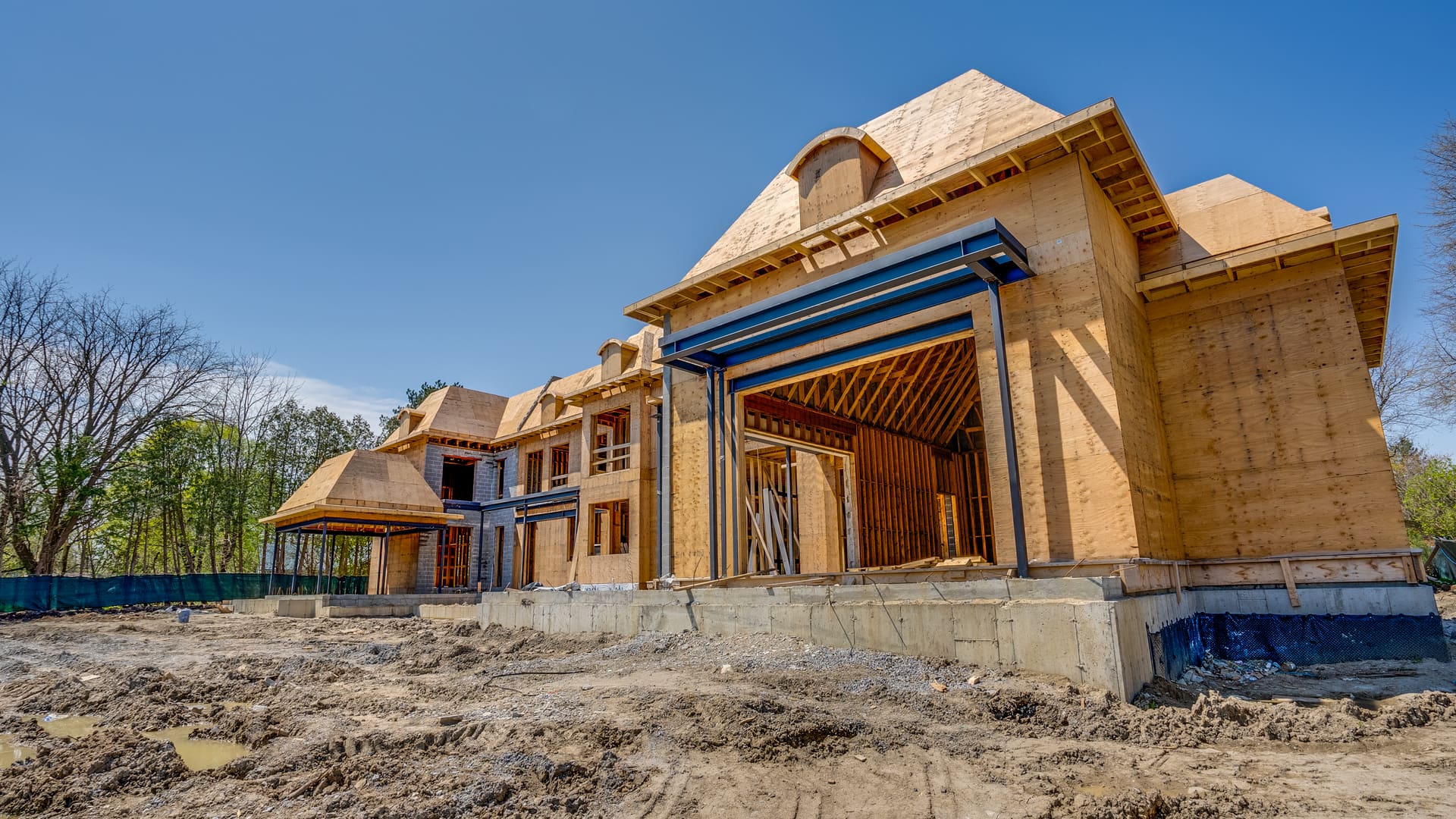
Framing marks the exciting transition from foundation to visible structure—typically taking 4-8 weeks for GTA homes.
The Framing Timeline: Phase by Phase
House framing in Toronto isn’t a single activity but a sequence of interconnected steps. Understanding each phase helps you track progress and anticipate what comes next.
Phase 1: First-Floor Deck and Walls (1-2 weeks)
Once your foundation passes inspection, framing begins with sill plate installation—pressure-treated lumber anchored to the foundation walls. The crew then installs floor joists and subfloor sheathing, creating the platform upon which first-floor walls will stand.
First-floor walls are typically framed flat on the deck, then tilted up into position. This includes:
- Exterior wall framing with window and door rough openings
- Interior load-bearing partitions
- Stairwell framing coordination
Toronto-specific factor: Foundation work in Toronto’s clay-heavy soils sometimes requires additional curing time before framing can commence. Hi Quality Homes coordinates closely with foundation contractors to ensure proper moisture levels before sill plate installation.
Phase 2: Second Floor and Roof Systems (1-2 weeks)
After first-floor walls are plumbed, straightened, and sheathed, the second-floor deck repeats the joist-and-subfloor process. Upper walls follow the same tilt-up method.
Roof framing represents the most weather-dependent phase. Whether your design calls for:
- Conventional stick-framed rafters: More labor-intensive but highly customizable
- Prefabricated trusses: Faster installation (often 2-3 days) but requires crane access
- Complex roof geometries: Hip roofs, dormers, and valleys add time
Toronto-specific factor: Crane availability in dense GTA neighborhoods can impact truss installation scheduling. We coordinate crane permits and street occupancy well in advance for projects in areas like The Beaches or Forest Hill where access is constrained.
Phase 3: Sheathing and Weather Barrier (3-5 days)
Once the roof structure is complete, the crew installs:
- Roof sheathing (typically OSB or plywood)
- Exterior wall sheathing completion
- House wrap or weather-resistant barrier
- Window and door installation (if included in framing scope)
This phase achieves what builders call “dried-in” status—the structure is protected from weather, allowing interior work to proceed regardless of conditions outside.
Phase 4: Interior Framing Completion (1 week)
The final framing phase includes:
- Interior partition walls (non-load-bearing)
- Bulkheads and soffits for mechanical runs
- Blocking for cabinetry, grab bars, and fixtures
- Stair stringers and temporary railings
Pro tip: This is when you should walk through your framed home with your builder. Identifying changes now—while walls are still open—saves significant time and money compared to modifications after drywall installation.
Realistic Total Timelines for GTA Projects
Based on hundreds of framing projects across Toronto, here are typical total durations from first lumber delivery to framing inspection:
| Project Type | Typical Framing Timeline | Variables That Extend Timeline |
|---|---|---|
| Detached garage | 1-2 weeks | Second-floor living space adds 1 week |
| Single-storey addition | 2-3 weeks | Complex roof tie-ins to existing structure |
| Two-storey addition | 3-5 weeks | Heritage requirements in neighborhoods like Cabbagetown |
| New custom home (standard) | 4-8 weeks | Architectural complexity, weather |
| New custom home (complex) | 8-12 weeks | Steel integration, SIP panels, winter construction |
| Multi-unit residential | 8-16+ weeks | Scale, staging, and coordination requirements |
Custom home construction in Ontario typically requires 12-18 months total from planning through move-in, with the structural shell phase occupying roughly 1-3 months of that timeline depending on complexity. For more details on the full construction process, visit the Ontario Building Code resources.
Factors That Accelerate or Delay Framing in Toronto
Weather: The Unpredictable Variable
Toronto’s climate presents unique framing challenges:
- Winter framing (December-March): Snow and sub-zero temperatures slow productivity and require additional safety measures. However, experienced crews continue working through winter with proper precautions.
- Spring rain (April-May): Wet conditions require more frequent material covering and can delay crane operations.
- Summer heat waves: Extreme temperatures require adjusted work schedules for crew safety.
Hi Quality Homes maintains winter framing protocols including temporary enclosures and heated hoarding when necessary, allowing year-round construction without compromising quality.
Material Availability and Specifications
Engineered lumber products (LVL beams, I-joists) often require 2-4 week lead times. Custom steel fabrication for moment frames or long spans adds 4-8 weeks to the pre-framing timeline. We order long-lead items immediately upon permit approval to prevent jobsite delays.
Site Access and Logistics
Framing projects in established Toronto neighborhoods face unique logistical constraints:
- Narrow streets limiting delivery truck access
- Limited material storage space
- Neighboring property proximity requiring special crane positioning
- Noise bylaws restricting work hours
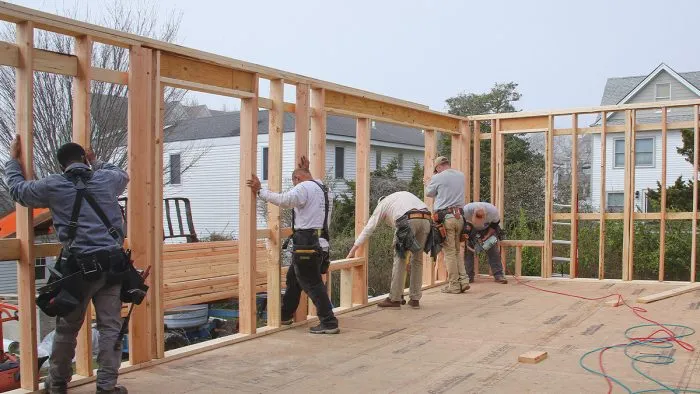
Proper material staging and site logistics planning prevents costly delays on GTA jobsites.
The Framing Inspection: Your Timeline’s Critical Milestone
In Ontario, a framing inspection is mandatory before insulation can be installed. The building inspector verifies:
- Structural compliance with approved drawings
- Proper fastening and connections
- Fire blocking and draft stopping
- Window and door installation
- Stair dimensions and headroom
The Ontario Building Code requires that framing inspection occur after all framing is complete and before any insulation is applied. This inspection represents the official transition from “rough” to “finish” construction phases.
Scheduling tip: Book your framing inspection 1-2 weeks in advance. Toronto’s Building Division typically requires 48-72 hours notice, but inspector availability can extend wait times during peak construction season.
What Happens After Framing?
Once your framing passes inspection, the project enters the rough-in phase:
- HVAC ductwork installation
- Plumbing rough-in (supply lines, drain/waste/vent)
- Electrical rough-in (wiring, boxes, panel)
- Low-voltage wiring (data, AV, security)
- Insulation installation
- Vapor barrier and air sealing
Each of these trades requires access to the open wall cavities framing provides. Proper coordination during framing—ensuring adequate chase space, proper header sizing for duct crossings, and correct backing locations—prevents costly rework later. Learn more about typical wall, floor, and roof framing standards.
Why Timelines Vary Between Contractors
Not all framing contractors operate with the same efficiency. Variables that impact how long house framing takes in Toronto include:
Crew size and experience
A dedicated crew of 4-6 experienced framers works significantly faster than smaller or less experienced teams. Hi Quality Homes maintains consistent in-house crews rather than relying on day labor.
Multi-trade coordination
When framing, insulation, and drywall operate under separate contracts, scheduling gaps inevitably occur. The integrated approach—one company handling framing through drywall—eliminates these gaps and typically saves 2-4 weeks on overall project timelines.
Prefabrication strategy
Some components (interior partition walls, roof trusses) can be pre-assembled off-site, reducing on-site labor time. This approach works well for production housing but requires careful planning for custom designs.
Questions to Ask Your Framing Contractor About Timeline
Before signing a contract, clarify these timeline-related points:
- “What’s your current project load and crew availability?” A contractor running multiple understaffed projects will inevitably delay yours.
- “How do you handle weather delays?” Understand whether extreme weather stops work entirely or if mitigation measures are in place.
- “What long-lead materials does my project require?” Identify items requiring early ordering.
- “How do you coordinate with other trades?” Clear communication protocols prevent finger-pointing when scheduling conflicts arise.
- “What’s your typical timeline for a project like mine?” Ask for references from similar-scope projects.
Realistic Expectations: Why Quality Framing Takes Time
While everyone wants their project completed quickly, framing is not a phase where speed should trump precision. Common framing mistakes—improper alignment, inaccurate measurements, neglected load-bearing considerations—compound into major issues during finish phases.
Rushing framing leads to:
- Walls out of plumb that telegraph through drywall
- Improperly sized headers causing future door/window issues
- Inadequate backing for cabinetry and fixtures
- Floor systems that squeak or deflect
Hi Quality Homes‘ 12-Point Framing Inspection ensures every project meets structural specifications before the framing inspection occurs. This internal quality control adds time to the front end but eliminates costly corrections later.
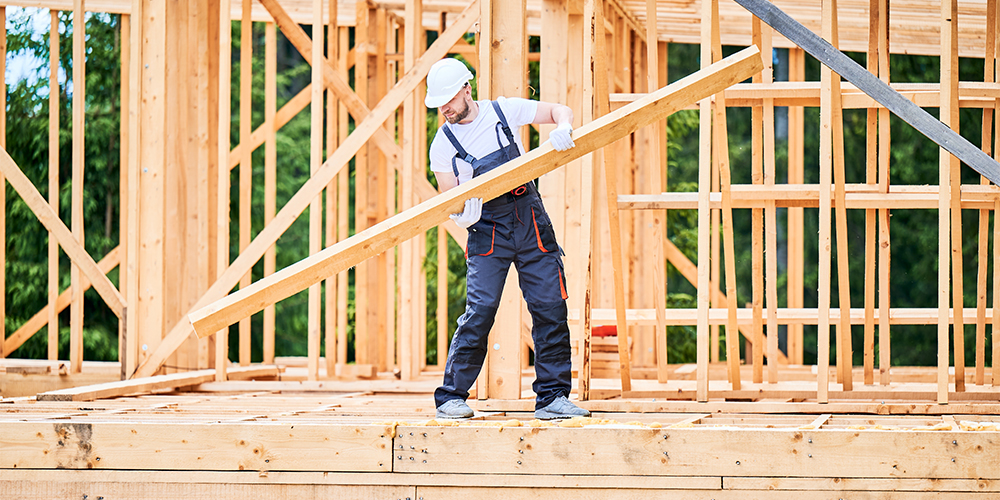
A properly framed home ready for inspection—the foundation for everything that follows.
Next Steps: Planning Your Framing Timeline
Understanding how long house framing takes in Toronto helps you plan financing draws, coordinate moving arrangements, and set realistic expectations with family members eager to see progress.
For Toronto homeowners planning custom builds or major additions, we recommend:
- Adding 2-3 weeks of buffer to any contractor’s timeline estimate
- Planning major life events (weddings, vacations) around likely construction peaks
- Maintaining flexibility during winter months when weather delays are most probable
Ready to discuss your project timeline? Contact Hi Quality Homes for a detailed framing estimate tailored to your specific project scope and location within the GTA.