

A framing inspection in Toronto isn’t just a formality—it’s a rigorous checkpoint that ensures your home’s skeleton won’t compromise your family’s safety. While you don’t need to memorize the entire Ontario Building Code (OBC) as a homeowner, understanding the Ontario building code framing requirements that govern wood-frame construction helps you communicate better with your builder and spot potential red flags before the inspector arrives.
The OBC (O. Reg 332/12) sets specific standards for everything from the size of the nails in your joist hangers to the width of your staircase. If your framing fails inspection, it doesn’t just mean a delay; it means a re-inspection fee and a hold on every trade waiting behind the framers—electricians, plumbers, and drywallers.
Here is what Hi Quality Homes ensures is correct on every GTA project before the city inspector sets foot on site.
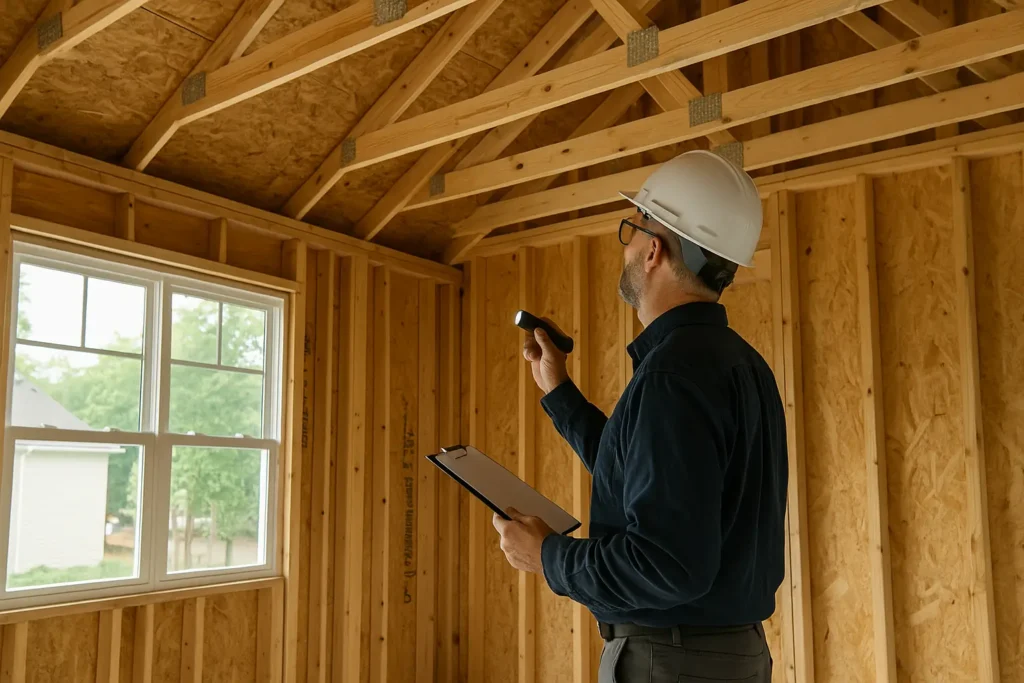
Toronto building inspectors verify strict compliance with OBC structural requirements—failing an inspection stops your project and adds unexpected costs.
1. Fire Blocking and Draft Stopping
This is one of the most frequently missed items on framing inspections across the GTA. The Ontario Building Code framing requirements mandate that concealed spaces within walls and floors be blocked off to prevent them from acting as chimneys in the event of a fire.
Where it’s needed: At each floor level, at the top of each stud wall, and around pipe/duct penetrations.
Why it matters: In a platform-framed house, the subfloor naturally acts as a fire stop between stories. However, in balloon-framed homes (common in older Toronto houses), vertical wall cavities run continuously from basement to attic without these stops. In a fire, flames and gases are drawn up these open chutes, rapidly spreading to every floor. If you are renovating an older Toronto home, retrofitting fire blocking is not optional—it is a life-safety requirement under Ontario building code framing requirements.
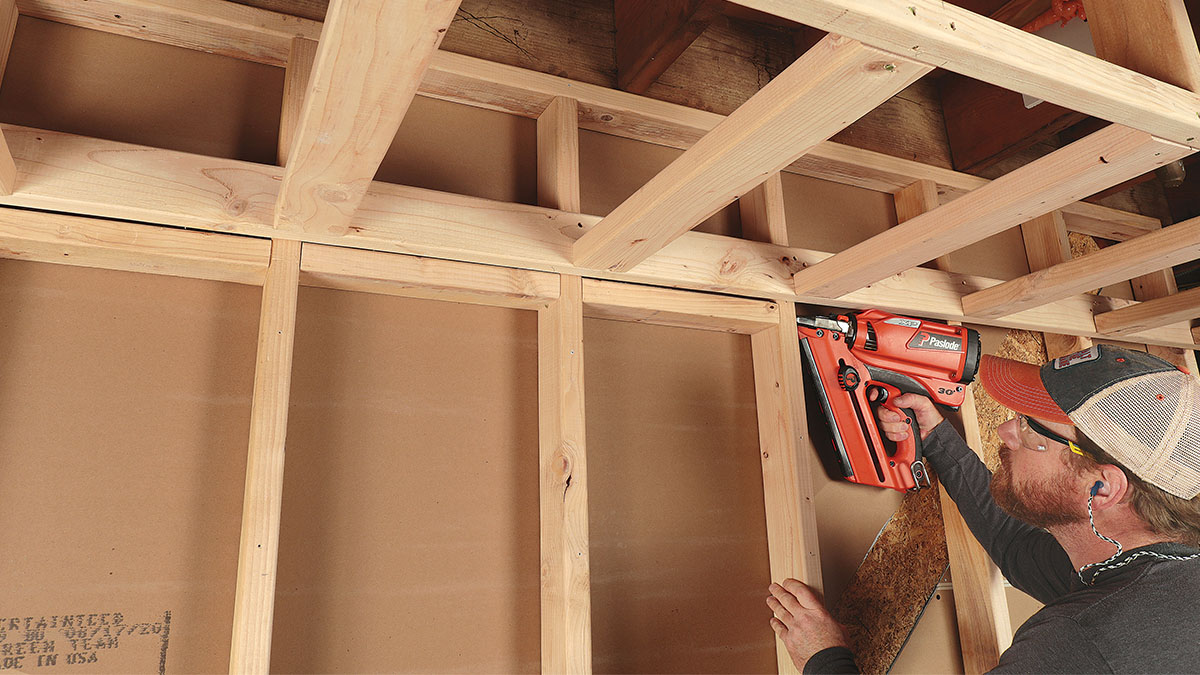
Fire blocking interrupts concealed wall cavities, preventing rapid fire spread through balloon-framed Toronto homes.
2. Stair Framing Geometry
Stairs are one of the most code-dense parts of the residential frame. The Ontario Building Code is strict about the “rise and run” because inconsistent stairs are a tripping hazard.
- Maximum Riser Height: 200 mm (approx. 7 7/8 inches).
- Minimum Tread Depth: 235 mm (approx. 9 1/4 inches).
- Headroom Clearance: Minimum 1,950 mm (6′ 5″).
- The Tolerance: There can be no more than 5 mm variation between the tallest and shortest riser in a flight.
Learn more about stair construction standards at Fine Homebuilding.
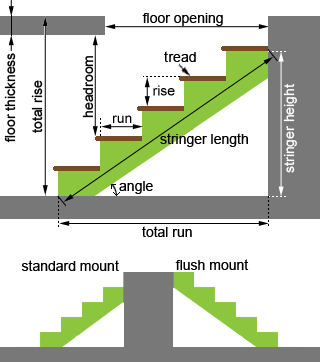
Stair framing must meet exact OBC specifications for rise, run, and headroom—even a 5mm variance in riser height can fail inspection.
3. Guardrails and Handrails
Many contractors assume these are “finishing” items, but the Ontario Building Code framing requirements mandate temporary guards at the framing stage wherever there is a drop of more than 600 mm (2 feet). If your framer calls for inspection without these in place, the inspector will likely stop the inspection immediately.
4. Structural Load Path and Bearing
This is the fundamental physics of the house. Every point load—whether it’s a beam holding up the second floor or a post supporting a roof girder—must have a continuous path down to the foundation.
Squash Blocks: In modern construction using I-joists (engineered wood), a heavy point load cannot just sit on the thin top flange of the joist. It requires squash blocks—vertical solid lumber within the floor cavity that transfers the weight directly to the structure below. Missing squash blocks are a common cause of sagging floors over time and a guaranteed failed inspection in Toronto.
Doubled Studs: Where a beam lands on a wall, the code requires multiple studs (usually 3-4) nailed together to support that concentrated weight.

Every point load must transfer correctly through bearing walls and columns down to the foundation—this is fundamental to OBC compliance.
5. Joist Hanger Nailing
It’s a small piece of metal, but it carries enormous consequences. The Ontario Building Code framing requirements demand that joist hangers be installed per the manufacturer’s specification, which almost always means every single nail hole must be filled with the correct size nail. A hanger with 4 nails out of 8 is operating at a fraction of its rated capacity.
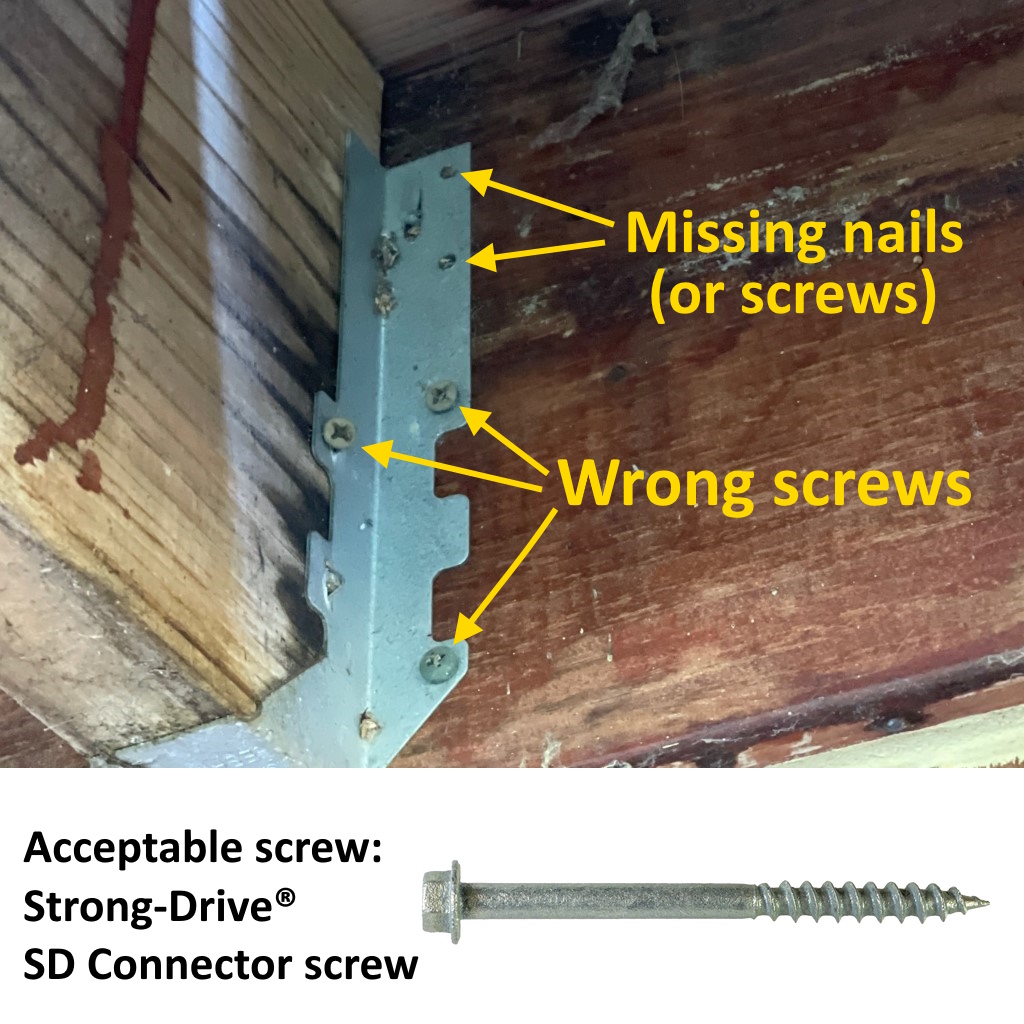
Every nail hole in a joist hanger must be filled to meet manufacturer load ratings—partial nailing is a common inspection failure in GTA municipalities.
6. Basement Egress and Ceiling Height
If you are framing a basement in Toronto, the Ontario Building Code framing requirements have specific rules that differ from the upper floors:
- Ceiling Height: Habitable rooms must have a minimum ceiling height of 1,950 mm (6’5″). If you have a bulkhead for ductwork, the area underneath it can drop to 1,800 mm (5’11”) only if it is not a main living area.
- Bedroom Windows: If a basement bedroom is framed, the window must be large enough for a firefighter with gear to enter. The minimum openable area is 0.35 m² with no dimension less than 380 mm (15 inches).
For detailed egress requirements, consult Ontario Building Code official resources.

Basement bedroom windows must meet minimum openable area requirements for emergency egress under OBC regulations.
7. Vapour Barrier and Air Sealing (OBC Tier 3)
As of 2026, new builds and major renovations in the GTA must meet Tier 3 Energy Efficiency standards. This goes beyond just adding more insulation. It requires careful framing to minimize thermal bridging—the loss of heat through the wood studs themselves. Advanced framing techniques, like 24-inch on-center spacing for non-load-bearing walls or insulated headers, are becoming standard practice in Toronto to comply with these updated Ontario building code framing requirements.
The Hi Quality Homes Pre-Inspection Protocol
We don’t just frame to code minimum; we frame to pass inspection the first time. Our 12-Point Inspection Checklist mirrors the exact path a Toronto building inspector takes. Before the city arrives, we verify:
- All point loads transfer correctly to bearing walls/footings.
- All squash blocks are present and tight.
- Fire blocking is in place at every level and penetration.
- Stair geometry meets OBC tolerances exactly.
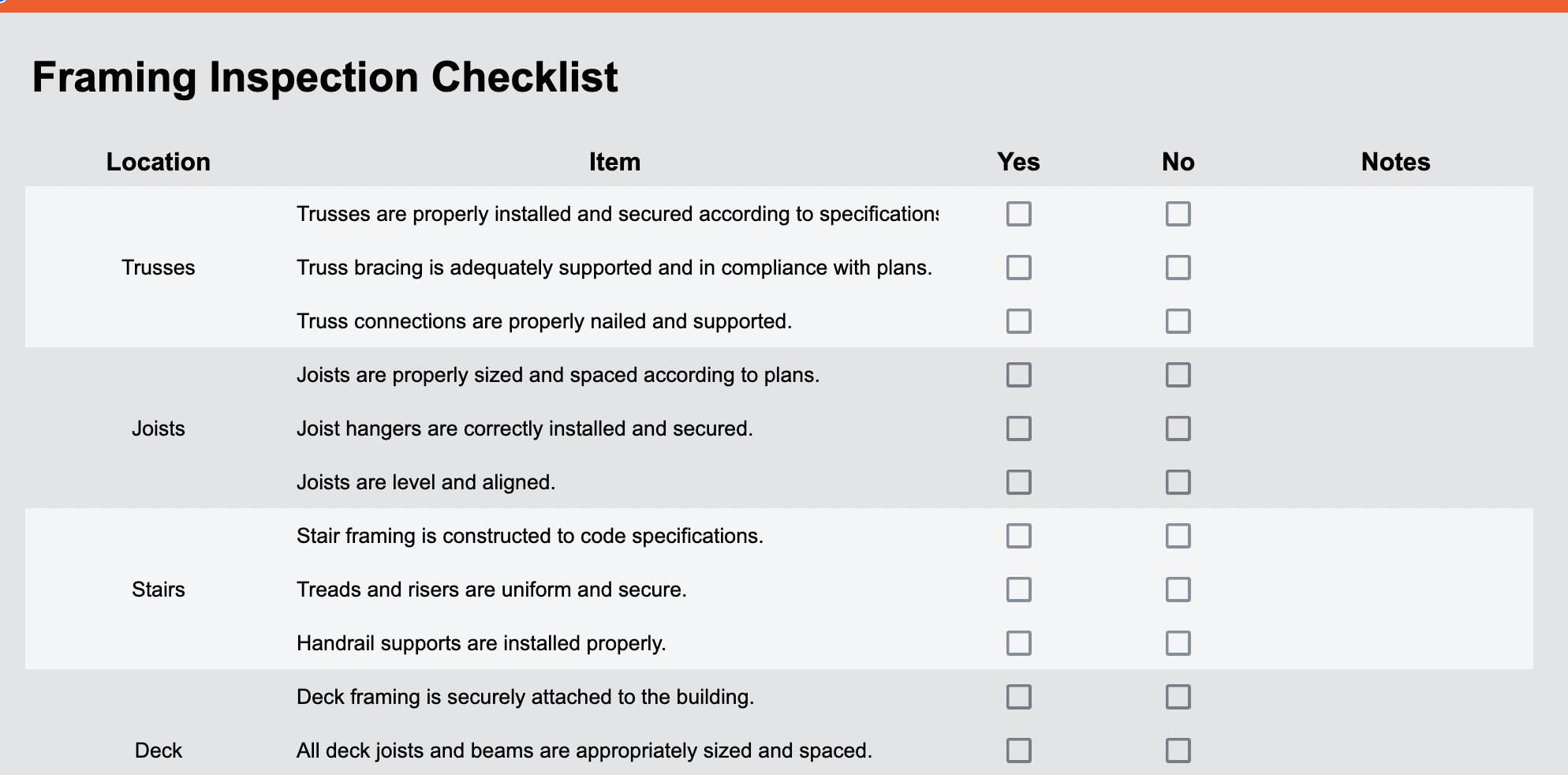
A systematic framing inspection checklist ensures every OBC requirement is met before the city inspector arrives.
Navigating Toronto’s building code doesn’t have to be stressful. Contact Hi Quality Homes for a free consultation on your framing project.